A sidewalk repair notice gives you a legally defined window — typically 30 to 90 days — to complete repairs before the city does the work and bills you, often at a premium rate. The clock starts on the notice date, not when you open it. Read the notice within 24 hours and begin acting immediately.
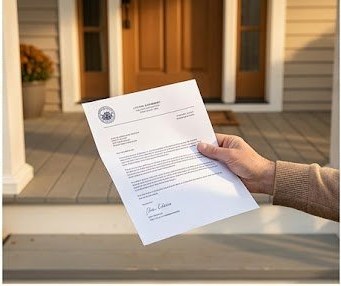
Your deadline runs from the notice date — not when you opened it
In most cities, the repair deadline is calculated from the date posted or mailed — not the date you received it. If the notice sat unopened for two weeks, you've already burned two weeks of your window.
Step 1: Read Every Word on the Notice
Before doing anything else, sit down and read the entire notice. Cities issue sidewalk repair notices in different formats, but every legitimate notice contains specific information you need before you can act. Don't assume the rules are the same as a neighbor's experience or what you've read online — the details on your notice govern your situation.
Look for these specifics: the deadline date or the number of days you have from the notice date; the section of sidewalk identified as defective (described in feet, by panel location, or by a case number); the defect type cited (vertical displacement, cracking, spalling, inadequate width); the city standard the repair must meet; and the contact information for the office managing your case. Write the deadline date on a calendar immediately.
The defect type matters more than most homeowners realize. A vertical lip displacement under 1.5 inches may be repairable by grinding — a $200–$500 fix. A fully cracked or heaved panel almost always requires replacement — a $1,500–$5,000 repair. Knowing what was cited tells you what kind of work you're facing before you call a single contractor.
Step 2: Photograph Everything Before Anyone Touches It
Within 24 hours, photograph every identified section of sidewalk. Shoot from multiple angles — close-up of the defect itself, the full panel, and the surrounding block face. Include a reference object like a ruler or coin to establish scale. Most importantly, photograph any nearby city infrastructure: tree pits, utility access plates, storm drain covers, and root systems visible above grade.
This documentation serves you in two critical ways. First, it creates a timestamped record of pre-repair condition, which becomes your evidence if you dispute the notice or if a contractor damages adjacent property. Second, and often more valuable, it documents whether a city-owned tree caused the damage — which in many jurisdictions either shifts responsibility to the city entirely or qualifies you for a cost-reduction program. See our full breakdown of tree root damage responsibility rules.
Look carefully at the root patterns around the heaved concrete. City-maintained street trees are typically planted in a cut-out (tree pit) adjacent to the sidewalk. If the roots clearly radiate from a city tree into your sidewalk slab, that visual evidence is worth documenting in detail before any repair work begins.
Step 3: Check Whether Your City Has a Cost-Sharing Program
Before you contact a single contractor, call your city's public works or transportation department and ask one question: "Does the city have an active sidewalk repair cost-sharing or subsidy program for homeowners?" This takes 90 seconds and could save you thousands of dollars.
Dozens of U.S. cities run programs that cover 50–100% of repair costs for eligible homeowners. Seattle's SDOT Sidewalk Repair Program has historically subsidized up to 75% of standard panel replacement costs. Denver's Concrete Sidewalk Program offers city-negotiated group rates that are significantly below market. Sacramento targets tree-related damage specifically. San Jose, Portland, and Philadelphia have all run programs in recent years. Our full cost-sharing guide tracks program status city by city with application details.
Applying to a program in some cities will formally pause enforcement while your application is under review — meaning the deadline clock may stop ticking. Even if you don't qualify, knowing that no program exists lets you move forward without second-guessing yourself.
Step 4: Pull the Permit Before Any Work Starts
In virtually every U.S. city, sidewalk repair in the public right-of-way requires a permit — even for homeowners doing the work themselves. Skipping the permit is one of the most expensive mistakes in this process. Cities that discover unpermitted sidewalk work will reject it outright, require you to tear it out, and may issue a separate fine on top of forcing a redo.
Permit applications go through your city's public works or building department. Many cities have online portals. Your notice will usually reference the permit requirement and may include a URL or case number to reference. Residential sidewalk repair permits typically cost $50–$250. When you pull the permit, confirm the exact material specifications the city requires: minimum concrete thickness (usually 4–6 inches), maximum allowable cross-slope (2% for ADA compliance), aggregate specifications, and expansion joint requirements.
Our complete sidewalk permit guide walks through the process city by city, including which municipalities allow online applications versus in-person only.
Step 5: Get a Minimum of Three Contractor Bids
Contact at least three licensed concrete contractors and ask for written, itemized estimates. Bids for identical sidewalk jobs routinely vary by 30–50%. The time investment — typically two to four business days — is among the most valuable you can make in this process.
When you reach out, provide specific information: the city notice case number, the defect type cited, the linear feet or square footage of the affected panel(s), whether the permit is already pulled, and any material specifications you received from the city. Ask each contractor to confirm they are licensed and insured in your city, whether their bid includes permit fees and debris disposal, and what written warranty they offer on the finished work.
Be cautious of contractors who approach you proactively after a notice is posted. Door-to-door concrete contractors operate in this space with mixed reputations. Verify any contractor's license number through your state licensing board before signing a contract. Use our free Contractor Bid Comparison Sheet to evaluate bids side by side across 12 standardized criteria.
Step 6: Schedule Work With Your Deadline in Mind
Back-calculate from your deadline date. Concrete cannot be poured in temperatures below 40°F or above 90°F, most mix designs require 48–72 hours of curing before foot traffic, and cities with permit inspection requirements add several business days after the pour. Booking a quality licensed contractor in a busy market can take one to three weeks.
If you have 60 days and have already spent 14 on documentation, program research, and permit pulling, you need to book a contractor within the next week to safely complete the work and schedule the inspection before the deadline. If you genuinely cannot complete repairs within the window due to contractor scheduling — not procrastination — contact the city in writing and request an extension. Attach documentation of your scheduled appointment. Many cities will grant a 30-day extension with credible evidence. Our deadline calculator shows exactly how much time you have and flags when buffer is running short.
Step 7: Document the Finished Work and Close the Permit
After the repair is complete, photograph the finished work immediately — full panel view, all four joints, connection to adjacent slabs — before the contractor leaves. If your city requires a permit inspection, schedule it through the permit portal or by calling the inspection line. Inspections for residential sidewalk repair are typically scheduled within one to five business days.
Once your permit is closed, request a written confirmation from the city's public works department that the notice case has been resolved. Not all cities send this automatically. Keep the closed permit record, the contractor invoice, and your before/after photographs in a permanent home file. If you sell the property, this documentation proves the work was completed correctly. Download our free Response Checklist PDF to track all seven steps in one printable document.
What If You Cannot Afford the Repairs?
Financial hardship doesn't automatically pause the enforcement clock, but options exist. Check your city for hardship waiver or low-income assistance programs — Seattle, San Francisco, and several other cities offer these. Check whether your homeowner's insurance policy covers the damage under a property liability clause (uncommon but worth a five-minute call). Some cities allow negotiated payment plans when the homeowner demonstrates financial hardship in writing.
If none of these avenues pan out and the city completes the work on your behalf, you'll receive a bill — typically due within 30–60 days. Unpaid, it becomes a property lien. A lien doesn't force an immediate sale, but it must be paid off at closing if you sell. See our guide on what happens when you ignore a sidewalk notice for the full enforcement timeline.
Day 0–1: Read & Photograph
Note deadline date. Photograph all damage and adjacent city infrastructure before anyone touches anything.
Day 1–3: Programs & Permit
Call city about cost-sharing programs. Begin permit application. Confirm material specs.
Day 3–7: Three Bids
Contact licensed contractors. Get written itemized bids. Verify licenses. Compare with bid sheet.
Day 7–21: Schedule & Complete
Book contractor. Confirm permit is active. Attend work day. Photograph completed work.
Day 21–30: Inspect & Close
Schedule permit inspection. Confirm case closure in writing. File all documentation permanently.
City-Specific Rules That Change the Picture
The steps above are broadly applicable, but city-specific rules can completely change your situation. In Chicago, the city typically funds and performs most sidewalk repairs — you may receive a notice that the city will do the work, not a demand that you fund it. In New York City, Local Law 49 of 2003 shifted substantial sidewalk responsibility to property owners, but the city still handles specific tree-adjacent damage through a separate program. In Los Angeles, a 2016 consent decree committed the city to covering tree-related sidewalk damage — worth checking before you pay for anything. Use our city guides to find your exact local rules before spending a dollar.
Frequently Asked Questions
Yes, in most cities — but you still need a permit and the work must meet city specifications. Inspectors evaluate DIY work the same as contractor work. Concrete forming, mixing, and finishing to city spec requires real skill. Most homeowners find the cost savings modest compared to the risk of a failed inspection requiring a costly redo.
Yes. Sidewalk repair obligations run with the property, not the owner. You may have a disclosure claim against the seller if they knew of an outstanding notice — consult a real estate attorney. As current owner of record, you are responsible for completing repairs within the window.
Depends on the defect cited. If the vertical displacement is small (some cities allow grinding for lips under 1.5 inches), grinding may satisfy the notice. If the defect is cracking or spalling, replacement is typically required. Confirm acceptable repair methods with the city before committing to any approach.
Contact the city's public works office immediately with documentation — the contract, scheduling correspondence, and evidence the work is underway. Most cities will accept a good-faith progress showing rather than enforce the deadline if completion is clearly imminent.
Standard HO policies generally don't cover routine sidewalk repair. Some policies cover damage from a specific covered peril (like a falling tree). Worth a five-minute call to your insurer — but don't delay action while waiting for an insurance answer.
Next Steps
Use the Deadline Calculator to find your exact window. Download the Response Checklist. Check cost-sharing programs in your city. Find your city's specific rules in the city guide index.
Disclaimer: Informational purposes only. Not legal advice. Always verify current rules with your local public works department.