Never hire a contractor who cannot immediately provide their state contractor license number for verification. Look up the number in your state's contractor licensing database before signing anything. Unlicensed concrete work creates real legal exposure and frequently results in work that fails city inspection.
Where to Find Qualified Contractors
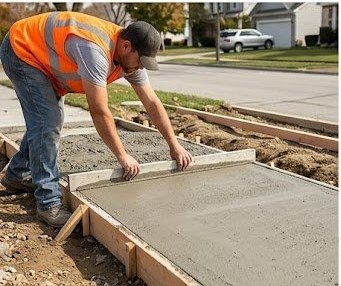
Concrete sidewalk repair is a specialized trade distinct from general concrete work. Not every concrete contractor is familiar with municipal specifications, ADA requirements, permit processes, and inspection standards for public right-of-way work. When hiring, specifically seek contractors who have recent experience with permitted sidewalk work in your city — ideally contractors who work regularly with your specific public works department.
The best starting points: your city's public works department may maintain a list of pre-qualified or frequently-used contractors (this is common in cities with cost-sharing programs). Your neighbors who have recently completed permitted sidewalk work are another excellent source — ask who they used and whether the work passed inspection without issues. Online review platforms show past work quality, but filter specifically for reviews that mention sidewalk repair, permits, and inspections — general concrete reviews don't tell you what you need to know about public right-of-way experience.
Avoid contractors who approach you proactively after a notice is posted on your property. While some are legitimate, the door-to-door concrete repair space includes a disproportionate number of operations that take upfront deposits, perform substandard work, and disappear before final inspection. Getting independently sourced referrals is safer than responding to proactive solicitation.
The 12 Questions to Ask Every Contractor
Before accepting any bid, get written answers to these questions. A contractor who hesitates or gives vague answers to basic questions is a red flag worth heeding.
1. What is your state contractor license number? Verify it before the conversation goes further. Most states have online license lookup tools — search "[your state] contractor license lookup." The license should be active, current, and in the name of the business (not a suspended or inactive license).
2. Are you licensed for public right-of-way work in this city? Some cities require separate licensing or registration for contractors working in the public right-of-way beyond the standard state contractor license. Confirm that the contractor is authorized to work in the specific public jurisdiction of your sidewalk.
3. What is your general liability insurance coverage amount, and can you provide a certificate of insurance? Minimum acceptable coverage for concrete work is typically $1 million per occurrence. Get the certificate, not just a verbal assurance. The certificate should name your city as an additional insured if required by your permit.
4. Do you pull the permit or do I? In many cities, the contractor is required to pull the permit. Confirm who is responsible, and if it's the contractor, confirm they will do so before work begins — not the day of. Get the permit number before any concrete is mixed.
5. Have you worked with [your city's] public works department recently? Recent experience with your specific city's permitting office and inspection standards is valuable. Ask what inspector they typically deal with and whether they've had work rejected recently — how they answer this tells you a lot.
6. What concrete mix will you use? The answer should reference a compressive strength (3,500 or 4,000 psi at 28 days is standard for most cities) and should mention a transit-mix delivery (ready-mix) rather than on-site hand mixing, which rarely achieves consistent city-spec strength. If they say "whatever bag mix we mix up," look elsewhere.
7. What thickness will the replacement panels be? The correct answer is 4 inches minimum for standard residential pedestrian sidewalks, 6 inches where the sidewalk crosses a driveway apron. A contractor who says "2–3 inches" is underspecifying for most city requirements.
8. How will you handle the cross-slope to meet ADA requirements? This is a technical question that separates experienced public right-of-way contractors from general concrete operators. They should reference digital levels and the 2% maximum cross-slope standard. Vague answers here are a real warning sign.
9. What is the payment schedule and what does it include? A reasonable payment structure is a modest deposit (10–20%) to hold the schedule slot, the balance due upon permit close-out (after the inspection passes). Never pay more than 30–40% upfront. The bid should explicitly include permit fee, concrete disposal, all forming and finishing labor, and any required curb work. Get this in writing.
10. What warranty do you offer on the completed work? Industry standard for concrete work is one year on materials and workmanship. More experienced contractors may offer two years. The warranty should be in writing and specify that it covers defects in workmanship, not normal wear from use or damage from city tree roots (which continue regardless of your repair).
11. Can you provide references from recent permitted sidewalk work in this city? Not general concrete references — specifically sidewalk work that went through the permit and inspection process. Call at least one reference and ask whether the work passed first inspection or required corrections.
12. What is your timeline from permit pull to final inspection? A realistic timeline for standard panel replacement is 2–4 weeks from permit application to inspection close-out, accounting for concrete cure time. A contractor who says "we can do it in two days, no problem" may be skipping the permit process or planning to skip the inspection. Either outcome is your problem, not theirs.
Comparing Bids: What to Look For
When comparing bids, ensure each bid covers identical scope: the same square footage, the same repair method (replacement vs. grinding), permit fee inclusion, and debris removal. A bid that appears 30% cheaper may simply exclude the permit fee and debris disposal. Download our free Contractor Bid Comparison Sheet for a side-by-side evaluation format across all 12 criteria.
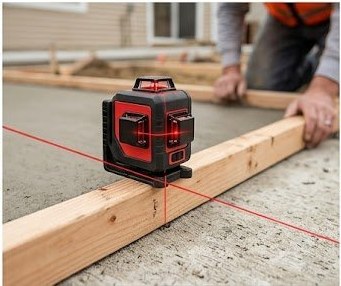
Motovera Self-Leveling Cross-Line Laser Level — #1 Best Seller
ADA compliance requires sidewalk cross-slope no greater than 2%. This 100-ft self-leveling green cross-line laser with tripod lets you verify your contractor's work — and catch a non-compliant pour before the inspector shows up. Includes manual and self-leveling modes, IP54 waterproof rating, and 4 brightness settings. Exactly what you need on pour day.
View on Amazon →As an Amazon Associate, we earn from qualifying purchases at no extra cost to you.
Frequently Asked Questions
Yes — a significant red flag. Full upfront payment removes your leverage if the work is substandard or the permit fails. Legitimate contractors understand that a post-inspection payment structure protects both parties. A demand for 100% upfront is a common marker of contractors who intend to cut corners or disappear before close-out.
Asking your neighbor is a great start — but still ask the 12 questions, especially about insurance, permits, and the inspection result. "Looks fine" is not the same as "passed city inspection at first attempt." Verify the permit status through your city's permit portal using the address or permit number if your neighbor has it.
No. Unpermitted work risks rejection, demolition, and redo at your expense — easily costing 3x the original job. The "discount" is the contractor avoiding risk on your behalf. If the unpermitted work is ever discovered (neighbor complaint, adjacent permit inspection, property sale), you bear all consequences. The answer is always no.
Disclaimer: Informational only. Not legal advice. Verify current rules with your local public works department.