Vertical displacement (one slab raised relative to another) of 1.5 inches or less can often be addressed by mechanical grinding. Displacement greater than 1.5 inches, full-panel cracking, spalling, or drainage problems almost always require full panel replacement. Your city's notice will cite the specific defect — let that guide which method is appropriate.
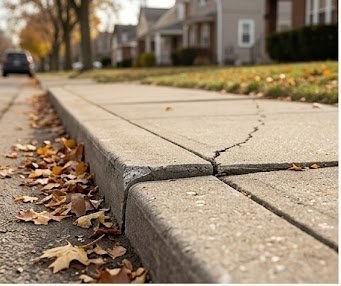
Understanding the Defect Types
The right repair method starts with understanding which defect was cited in your notice. Cities classify sidewalk defects into categories that carry different required remediation approaches. The most common categories are: vertical displacement (one panel raised or sunken relative to an adjacent panel, creating a lip); full-panel cracking (the concrete has fractured, creating separate pieces that move independently); spalling (surface deterioration where the top layer is fragmenting or scaling off); heaving (the entire panel has lifted out of grade level, often from root pressure below); and inadequate width or slope (the sidewalk no longer meets current ADA or municipal width or cross-slope standards).
Grinding is appropriate for one type only: vertical displacement that is within the city's grinding threshold. Every other defect type typically requires full panel replacement. Attempting to grind a severely cracked panel doesn't fix the structural problem — it reduces the surface elevation differential temporarily while leaving the structural failure in place, which will re-manifest in weeks to months and result in re-citation.
Mechanical Grinding: When It Works and When It Doesn't
Mechanical grinding — also called "trip hazard remediation" or "concrete grinding" — uses a diamond-tipped grinding wheel to reduce a raised lip by progressively removing material from the higher panel. The process creates a beveled transition (typically at a 1:12 slope) from the lower panel to the higher one, eliminating the abrupt vertical step that constitutes the trip hazard. The beveled transition must typically span at least 12 inches horizontally (in many cities, longer) to create a slope that meets ADA guidelines.
Grinding works well for displacements of 0.5 to 1.5 inches where the raised slab is otherwise structurally sound (not cracked or spalling). It is fast — a typical grinding job takes one to two hours per panel transition — and significantly less expensive than replacement, typically costing $150–$500 per location versus $800–$3,000 for a full panel replacement. The grinding process generates fine concrete dust and slurry that must be cleaned up and disposed of properly — some contractors include this, others don't. Confirm slurry disposal is included in the bid.
Grinding does not address the underlying cause of the displacement. If a tree root caused the heaving, that root is still there — actively growing — and will continue pushing. Most cities allow grinding as a temporary fix for moderate displacement, but may require a more permanent solution (root pruning plus replacement) if the same location is recited within a specified period (typically 3–5 years). Grinding a location without addressing the root cause is buying time, not solving the problem.
Full Panel Replacement: The Permanent Solution
Full panel replacement removes the existing concrete slab entirely (using a demolition saw and removal crew), addresses any underlying cause (root pruning, sub-base correction, utility conflict resolution), prepares the sub-base to proper compaction and grade, forms the new panel to city specifications, and pours fresh concrete to the specified mix design. The finished panel — when done correctly — should be indistinguishable from adjacent panels in height, width, slope, and surface texture.
Full replacement is required for cracked panels, severely heaved panels (more than 1.5–2 inches), panels with inadequate width or slope, and panels where grinding would remove so much material as to compromise structural integrity (thin panels, panels with rebar near the surface). It is also required when the city's notice specifically calls for replacement rather than repair — this language will be explicit in the notice.
The replacement process takes one full day for most residential panels: demolition, forming, and pour in the morning; finishing in the afternoon; curing for 48–72 hours; forms removed; and final inspection scheduled. The total project timeline from permit to inspection close-out is typically 2–3 weeks. Our deadline calculator builds this timeline into its deadline tracking.
Cost Comparison
| Method | Typical Cost | Timeline | Best For | Addresses Root Cause? |
|---|---|---|---|---|
| Grinding only | $150–$500/location | 1–2 hours | Displacement ≤1.5" | No |
| Grinding + root pruning | $400–$900/location | Half day | Tree-caused displacement | Partially |
| Panel replacement | $800–$3,000/panel | 2–3 weeks (incl. cure) | Cracking, heave, spalling | Yes (if sub-base addressed) |
| Mudjacking/slabjacking | $500–$1,500/panel | 1 day | Settled (sunken) panels | Partial |
Mudjacking and Slabjacking: A Third Option
Mudjacking (also called slabjacking or concrete lifting) is a repair method used specifically for panels that have settled or sunk below grade — the opposite of heaving. Crews drill holes through the settled slab and pump a slurry (typically cement, soil, and water) beneath it to raise it back to original grade. The process is faster and cheaper than replacement for simple settlement cases and can be effective when the concrete slab itself is structurally sound (not cracked) and the settlement is due to sub-base erosion or compaction failure rather than active root damage.
Mudjacking is not appropriate for panels that are cracked or have significant structural defects, and it's not effective for panels heaved by tree roots (the roots are still pushing). Some cities accept mudjacking as a permanent repair; others classify it as a temporary measure and require full replacement within a specified period. Confirm your city's position on mudjacking as a permanent fix before committing to this approach.
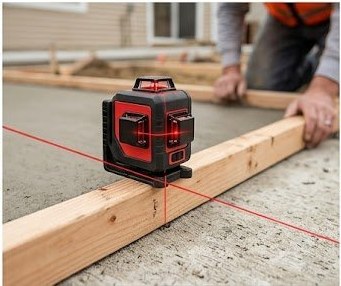
Motovera Self-Leveling Cross-Line Laser Level — #1 Best Seller
ADA compliance requires sidewalk cross-slope no greater than 2%. This 100-ft self-leveling green cross-line laser with tripod lets you verify your contractor's work — and catch a non-compliant pour before the inspector shows up. Includes manual and self-leveling modes, IP54 waterproof rating, and 4 brightness settings. Exactly what you need on pour day.
View on Amazon →As an Amazon Associate, we earn from qualifying purchases at no extra cost to you.
Frequently Asked Questions
Possibly — but confirm with the city which methods they consider compliant for your specific defect. "Repair or replace" language often means the city will accept either method, but the acceptable repair method may still be limited by the defect type. Call the public works office with your case number and ask specifically whether grinding will satisfy the notice.
Grinding marks (grinding striations) are cosmetically visible but structurally and legally acceptable in most cities. What matters to the inspector is the final slope of the transition and the absence of a trip hazard. Some contractors offer a "smooth finish" step after grinding that reduces visibility, but it's not typically required by code.
Concrete grinding equipment (angle grinders with diamond cups, walk-behind concrete grinders) can be rented from equipment rental companies. DIY grinding for small lips is feasible for skilled DIYers. However, the work still needs to pass the same city inspection as professional work. The ADA-compliant bevel angle requirement and slope compliance are harder to achieve without experience. Hiring a professional for this specific task is often worth the cost.
Disclaimer: Informational only. Not legal advice. Verify current rules with your local public works department.